Our new and improved site

(with the same content as this one, AND MORE!) is

www.The SharingGardens.blogspot.com/

Thursday, December 15, 2016

"Sharing Gardens" for Local Food Security

A unique and viable approach to establishing local food self-reliance while building stronger communities.
Sharing creates abundance!
We've been watching the dramatic weather world-wide: floods, droughts, hurricanes, tornadoes, heat waves and record snows! In recent years, every country that grows food has experienced repeated significant crop-failures. Pests, weather and super-weeds are all taking their toll. It seems more important than ever for people to learn to grow, at least some, of their own food. At the Sharing Gardens (MAP), we demonstrate a style of gardening that builds soil fertility using locally-generated, renewable and sustainable materials - like leaves and grass-clippings - that are commonly considered waste products. This model also fosters trust and a sense of community at the neighborhood level; relationships that can be called upon in times of social, or environmental stress. It by-passes "business-as-usual" in that it generates a bounty of "organic" fruits and vegetables feeding far more people than it takes to run it and no money ever changes hands. We call it a "Sharing Garden".
Sharing the bounty - garden helpers "shop" for their week's vegetables. 
What makes these Sharing Gardens unique is that, instead of many separate plots, that are rented by individuals, we all garden together. All materials and labor are donated. The food we grow is shared by all who have contributed in some way. All surplus is donated to local food-charities (like Food Banks and Soup Kitchens). No one is ever charged money for the food that is grown.
Lettuce and other vegetables being donated to a local food-charity.
This model is easily replicated anywhere there are vacant lots with a water-source, and people with enough gardening experience to oversee the project and does not require a large input of money to make it work. It can be adapted to many different scales of gardening; from a few families who live and garden on the same block, to a multi-acre production farm. "Sharing Gardens" help keep materials out of burn-piles and the land-fill (garbage dumps) through re-using, re-purposing and encouraging people to share their surplus.

Overview of the Sharing Gardens
Benefits of a Sharing Garden 
Harvest Totals - 2012
Using Leaves and Grass-Clippings to Create Soil-Fertility
 Wish List - To Donate

To view videos about the project, LINK including the the Peak Moment video: The Giving is Growing.
To read articles about the project: Click Here
 
Volunteers from our local university help the gardens thrive!

Thursday, June 9, 2016

Grow Your Own Protein - Scarlet Runner Beans


by Chris Burns
Just like snow flakes, you'll never find two that look exactly alike,  attesting to Nature's infinite variety of expression!
Have you ever seen these beautiful beans for sale at any market?  Would you even know what they were if I didn't tell you?  Don't they look like some kind of 'Magic Bean' that Jack of 'The Beanstalk' fame might have planted?  If you haven't guessed by now, I'll tell you. They're Scarlet Runner Beans and they're called that for two good reasons.  One, they have the most intensely scarlet red flowers, and Two, they 'run' up any pole, tree, fence or trellis that happens to be close to where they are growing.  If you've never grown them then maybe it's time to consider giving them a place in your garden.

I've grown them many times before, but up until recently I always considered them to be strictly 'ornamental'.  Don't know why!  Perhaps it's because they were described that way in the catalog from which I ordered my first seeds.  As you can see in the pictures posted with this article, they add exquisite beauty to any garden patch. It wasn't until 2011 that I sampled them as cooked, dried beans and discovered their beauty is only rivaled by their delicious flavor!
Scarlet Runners vining up the bamboo trellis. We grew a 70-foot row last year and are doubling it in the 2013 season.
These beauties grow steadily to a dramatic height of 10-12 feet (or more) and need a sturdy trellis of some sort to support the weight of their generous profusion of bean pods (we used bamboo poles tied to a wire pulled taught between t-posts). For those who enjoy attracting pollinators to your garden, you'll likely find (as we did) that the flowers regularly attract hummingbirds and many beneficial insects. (If you have cats, best not to grow the runners as we've heard sad tales of hummingbirds being caught and killed by those furry, domestic predators).

Bean-trellis made with bamboo poles wired to a cable.
Scarlet Runner Beans will grow in a greenhouse too. Just be sure to leave enough vents open to allow pollinators to come and go.
Plant beans 4"-6" apart and 1"- deep. Soil can be course and should stay moist but not too wet as seeds germinate. Often we will pre-sprout the seeds by keeping them between wet towels for several days till they germinate. Be very careful when planting as the sprouts are fragile.
The pods are deliciously sweet when they are young and tender (about 3-4 inches long).  So sweet, in fact that it was the first thing our two teen-age garden-helpers would seek out and munch on whenever they came to the gardens.

Bean pod-loving teens!
If it's mainly green beans that you're looking for though, it's probably best to grow another variety like 'Blue Lake' or 'Contender' which provide you with more of a volume at each picking.  These Scarlet Runners tend to produce pods steadily over a longer season but they become tough and stringy if they aren't picked on the small side.  The reason they probably aren't grown commercially for dried beans is that they must be hand-picked. At the Sharing Gardens we've turned this limitation into an asset as the weekly bean-picking was a task that folks with back and knee-issues could accomplish easily standing up. After a few days laid out on screens in the greenhouse the husks were dry enough to split open easily by hand. This was a task that many volunteers (share-givers), who weren't able to do more strenuous tasks,  found fun and relaxing; it also provided an opportunity to sit in the shade and chat with new found friends.

Pods, any bigger than this and they're too tough to eat green.
If it's dried beans you want, don't pick the pods until they are evenly tan and dry. If picked too green, beans won't store well, nor will they be viable for planting next year's crop. Once the frost hits, beans will no longer ripen much more. Pull up the whole vine and let the beans finish ripening in a green-house or warm, dry place before picking them off the vines. When they are as dry as they're going to get, shell these partially ripe beans and use them first as they won't store as well as fully cured beans.

These beautiful beans are rather large --about the size of a fat Lima bean-- and therefore yield enough to make a pot of soup-beans in a short time. If you're serious about growing your own protein-source, Scarlet Runners make an excellent choice.
Harvest beans once their pods are tan and dry. OSU-students shelling Scarlet Runner Beans.


Shelling beans from their pods is a fun activity for all! Jim and Adri shelling kidney beans.
But the best kept secret of all is just how delicious the dried beans are. They have a mild flavor and, unlike Fava beans, their skin is thin (not even noticeable) and they have a velvety texture.

A bamboo tipi provides a trellis for beans and beautifully frames our garden helpers.
Recipe: To cook these beans for eating, soak them over night just like you would any other, with about 1/3 beans to 2/3 water in a stainless or cast iron pot.  Pour off the water the next day; rinse the beans with fresh water and put them back in the pot. Add fresh water until the level is about 2-3 inches over the beans.  Don't add any salt because it won't allow the beans to absorb the water as they cook and they'll never soften.  I like to cook them on the woodstove in the winter.   These beans stay very firm when they're finished cooking but can be easily mashed and used as refries, or made into a hearty chile with tomatoes, onions, peppers and Mexican spices.  I cook up a large pot at a time and, once rinsed and cooled, I pack them into smaller zip-lock bags which I stack in the freezer to add to stir-fried kale and leeks with potatoes all winter long. Instant dinner!

Be creative! Sometimes just a plain ole' bowl of beans with olive oil, soy sauce, finely chopped onions and grated cheese is all you need to get you in the mood to go outside and brave the winter elements.

Such beauty!
Anyway, if you want to enjoy these wonderful and versatile garden gems, the time to plant is coming up soon! (late May or first week of June in our region)  If any of our local readers need seed  please let us know and we'll get you started, and you can save your own for next year.  Happy Gardening!


To see other "How To" articles, go to our new and improved site: http://thesharinggardens.blogspot.com/


Caleb loves scarlet runner-beans! So sweet, when they're young and tender.


Friday, August 15, 2014

The Sharing Gardens is Going to Court!

The Sharing Gardens is in the process of applying for an exemption from paying property taxes and we need letters of support from as many people as possible by Friday, May 15, 2015. If you have been touched by what we do--either directly through receiving seeds, starts or vegetables; participated as a volunteer, received mentorship or guidance on starting a similar project and/or growing food organically; or you are one of the thousands of people who come to our website from all over the world each month, please write us a letter of support so we can show the court that what we do makes a positive difference in your life!

All government buildings, libraries and public service agencies such as police and fire departments are exempt from paying property taxes. Some non-profit agencies and projects are also granted exemptions if they can prove that they are providing valuable services to the public that supplement or augment government programs. We feel that the Sharing Gardens qualifies. The money that we save from paying taxes can go directly into keeping the Sharing Gardens thriving and expanding.

Here are some facts about the project:
  • The Sharing Gardens was begun in 2009 (we are now entering our seventh season).
  • We are 100% non-commercial and rely entirely on donations and volunteer labor for the success of the project.
  • We save 85% - 90% of our own seed which we share freely at seed swaps and to local gardeners. Seed-saving is one of those skills that is a dying practice but one that we hope to keep alive and teach others how to do.
  •  We grow all our own 'starts' from seed. Each year we give away literally hundreds of these 'starts' to other local sharing-type gardens and non-commercial gardeners. This amounts to over 2/3 of the starts we grow.
  • All the vegetables we grow are shared freely with volunteers and local food charities. In 2012 (the last year we kept records) we shared over 6,000 pounds of food and hundreds of heads of lettuce and other greens. Our capacity to grow and share is still expanding. For many of our recipients we provide their only source of organic produce. No one is ever charged money for the food that is grown.
  • Our educational website receives over 8,000 visits per month! People come from all over the world seeking simple, clearly illustrated information about growing food without the use of harmful chemicals. We also teach about using local materials such as leaves and grass for soil fertility to begin weaning gardeners away from using commercial products mined and shipped from far away places in unsustainable ways. We are giving new meaning to the idea of growing 'local' food (if you have to ship your soil amendments from half-way around the world, just how local and sustainable is it?)
  • We provide mentorship to other people starting up sharing-type community gardens where they live.
  • We have begun forming partnerships with the local County Health Dept. and Health Clinic to assist them in delivering a class on changing life-style habits (including food choices) to increase health and well-being in the obese and pre-diabetic.
  • Since 2013, when we began hosting Oregon State University students "service learning" projects we have had at least 17 groups of 4-6 students each spend four-hours learning about organic farming, experiencing first-hand the spirit of generosity.
  • Nine months out of the year we have volunteer sessions 1-3 times a week. Our "Share-Givers" learn about gardening, form new friendships and experience the feeling of sanctuary that the gardens provide.
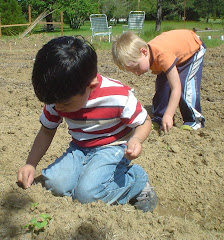
Kids in the carrot patch.
We feel that one of the most important "services" we provide is one of inspiration! In a world that is overrun with competition and strategies of "giving the least to get the most" we feel it is especially important to provide a demonstration of the power of generosity. The Sharing Gardens is an oasis of hope in a desert of cynicism and despair. Each year as we plant seeds in the soil that will grow to ripeness and feed the bodies of those in our community, we are also planting seeds of love, inspiration and joy that will feed people spiritually as well. If you are one of those people who has been touched or fed by the Sharing Gardens, please send us a note about it today!


Please include:
  • Your name and where you live
  • Your title and name of organization you represent (if relevant). Letters on letter-head are particularly persuasive.
  • Email is fine, or a Word-doc or PDF. Send to our email address
  • Send ASAP, by Friday May 15, 2015 at the latest (we have only one chance to make our case).
Regardless of the outcome of our case, we will do our best to continue to provide this public service for as long as we are able. Thank you for all the ways you have shown us your support in the past and the ways you are making the world a better place in your own way! Much love, Llyn and Chris

P.S.The Sharing Gardens is already a legal non-profit organization and can receive tax-deductible donations. This court case will simply determine if we must pay annual property-tax.
 

Wednesday, February 26, 2014

Crocuses, Onions and Peas, Oh My!


First crocuses of 2014
The last of the fourteen inches of our February snow have melted though rivers are still running high from recent heavy rains. Here in the Willamette Valley of Oregon, it still feels like winter is hanging on a bit but just in the last few days we noticed crocuses blooming in our yard; always a sign of spring's approach.

Another sign of spring's arrival includes getting peas and onions started in the greenhouse which is what we did last week.

Here are links to articles we have written about the techniques we use to get a jump-start on pea and onion growing.

We continue to plug away at the old farmhouse renovations. Still lots to be done but we hope we can begin moving in by late-March. Here are a few pics:

An upstairs bedroom. All exterior walls have been retro-fitted with rigid foam insulation and 1/4" paneling. Should be very cozy! Painting begins soon.

We're creating our own kitchen cabinetry out of second-hand drawer-units and old solid-core doors for counter-tops. We're installing our own plumbing but have hired a great guy to re-do all the electric. Don't want to take any chances with faulty wiring.
We're re-sheathing the whole outside as the original siding is over 100 years-old and, in places, showing signs of extreme wear. The upright poles are framing for our wood-shed. We'll be heating exclusively with wood. All windows and doors have been replaced with double-paned glass.
Gratitude to Steve Rose for grape and basket-willow cuttings; Courtney Childs for grape cuttings and his sunny disposition! If they all root, it looks like we'll have plenty of canes to share--let us know if you're interested in starting some grapes in your own garden. And thanks as well to Al and Arlene Looney for their donation of walnut/laminate flooring; it will really tie things together nicely at the old farmhouse.

If you're local and would like to come join the fun, be sure to let us know! Here's a link to our volunteer (share-givers) info-page.

We hope that signs of spring are showing up in your neck of the woods!

Friday, December 13, 2013

The Giving is Growing - Peak Moment Video

 Here's a beautiful video about the Sharing Gardens, just released by our friends at Peak Moment TV. Filmed in July 2013 with the garden's bounty as backdrop, we explore the philosophy that is at the root of the gardens: simple-living, gratitude and giving without accounting. Enjoy!

Our deepest gratitude goes out to all of you who have supported this project in any way, from distant well-wishers to those of you locals, rolling up your sleeves and getting your hands in the dirt side-by side! All of us together have made this expression of 'sharing' possible.

Here's the video (watch it here on our site by clicking on the image below, or click the icon in lower right-hand corner of image to view on YouTube):


 To watch it on the Peak Moment site, or view their other excellent programs, Click Here.

If you've enjoyed it, and feel so inclined, please pass it along to your network of friends and family. Much love, Llyn and Chris - The Sharing Gardens

Part of our massive beet harvest - 2013

Wednesday, November 13, 2013

Putting Down Roots--The Sharing Gardens Has a Permanent Home!

Chervena Chuska sweet peppers
Hello friends and supporters of the Sharing Gardens, near and far -

We realize it's been literally months since we've posted anything new on our site. So much great stuff has been happening that we've been feeling too overwhelmed to write! What follows is the really big news. We promise we'll fill in details and share photos and highlights from the 2013 growing season as soon as we can, but for now...

The most exciting development is that we're buying the land we've been gardening on for the past four years in Monroe! The property is about three and half acres (we've been growing food on about 2/3 of an acre up till now). It has two existing sheds and a farmhouse built in 1875 (it's the second oldest house in Monroe). There's a deep, strong well that produces delicious abundant water and an artesian spring that brings water right to the surface. The farmhouse is two-stories high and will need a lot of work (it's been unoccupied for about seven years and heavily vandalized.) But it's "bones" are solid and it's got great soul. We've already begun renovations and it's going to be a sweet place to live.

The 1875 farmhouse.
Back side of farmhouse
The majority of the land has been pasture/grass. Now that we know we can stay, we're preparing ground to put in fruit and nut trees and berry bushes. Our local friend and supporter, David Crosby (not the rock star!) has been helping us find nursery stock to get us going. Eugene Wholesale Nursery is providing us with 33 trees, 6' to 8' tall (apples, pears and plums) at three dollars apiece! They're the "seconds" so some may be shaped a little funny till we get them pruned up right. David has also helped us connect with Fall Creek Nursery who specializes in blueberries. These folks have made an outright donation of three dozen bushes, specially selected for our growing conditions (that will be three, fifty-foot rows). We also want to plant figs and seedless grapes. Please let us know if you have a lead on where we can get some cuttings locally and we'll root a bunch to share. (Please see our complete wish list to see how your cast-offs can become Sharing Gardens treasures.)

Most of the original square nails are still holding the farmhouse together!
Some of the plans for the land are still developing... There's a low part of the land that might be perfect to grow cane-willow (for basket weaving) and bamboo (for various purposes). Our neighbor has been encouraging the native Camus lily to re-establish itself on his wetlands and we too want to encourage native species to regain a foothold. We've started a hedgerow of Rosa Rugosa - which will provide giant rosehips for both humans and wildlife and we've managed to establish five American chestnuts (endangered on the East coast). Chestnuts also provide food for people and our animal friends.

Tree planting--a sign of hope.
We are very grateful to the Crowson family (the previous owners of the land). Chester (the patriarch of the clan) was the one we first approached about using the land for free. He really loved our project and gave us his full support--even paying to have a new pump installed in the well and paying the power-bill to keep the pump running for these past four seasons. When he passed away in the winter of 2012 we were a bit anxious about whether we would be allowed to stay but his grown children were happy to carry on with the original agreement. We always knew that the land was for sale and that, if it ever sold that we would have to leave at the end of that year's growing season. That's why we never planted fruit trees or invested much in permanent improvements to the land or buildings.

At first, when oldest son, Jerry Crowson told us that the family had to get serious about selling the land, our hearts just fell. The original asking price was way beyond anything we could afford. But then he told us that they were dropping it by about 2/3 and it suddenly was within our means! Much thanks too to Llyn's Dad, Bob Peabody who made the finances available for us to purchase the land.

Sunny days in the bean patch
Now we can really put down roots and expand our rural arts school--offering hands on, practical experience in growing food organically, canning and other forms of food preservation, vegetarian cooking, basket-weaving and all the other aspects of our Mission Statement. The Sharing Gardens will continue to thrive and grow providing a common-ground gathering place dedicated to the cultivation of generosity.

A great year for carrots...and kids!
Thank you for all your support and help to encourage us along the way.